
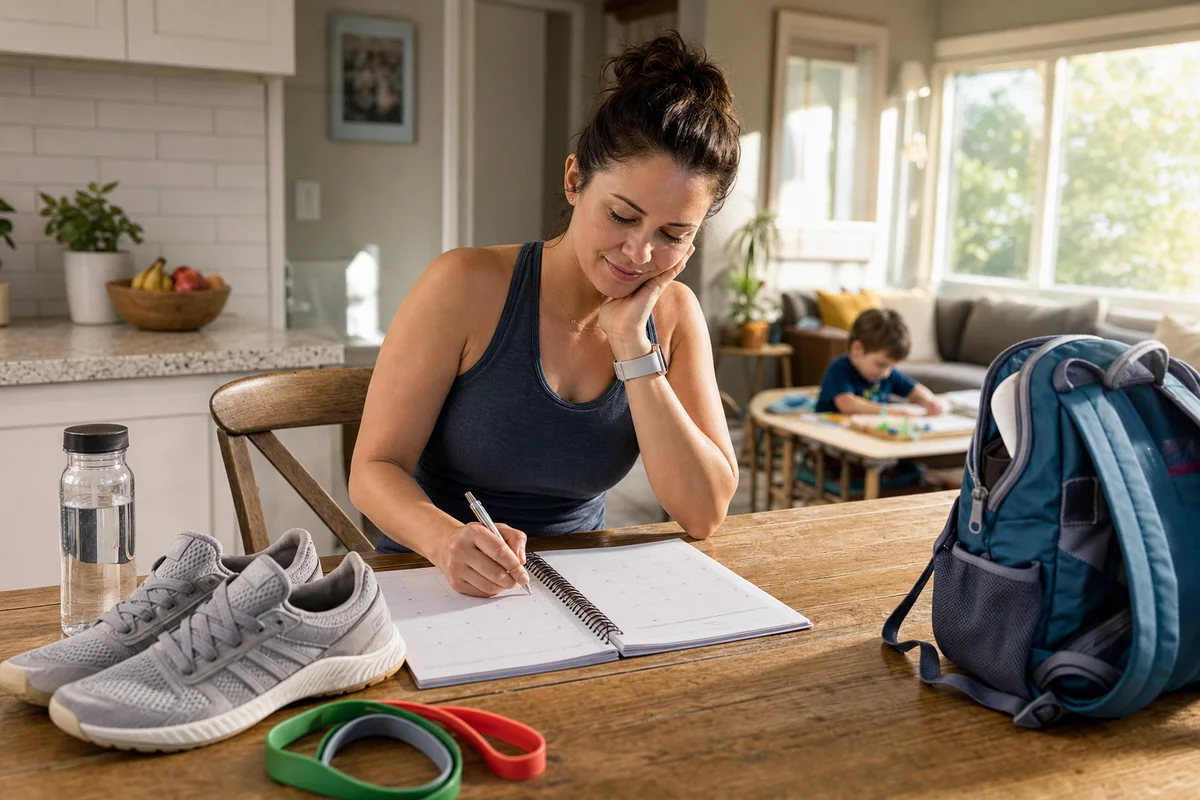
A practical FITT principle guide for busy parents who need simple weekly fitness structure.
This article is educational and is not medical advice. Anyone managing a medical condition, injury, medication, or youth training program should work with a qualified professional.
What FITT means
FITT stands for frequency, intensity, type, and time. It is a simple way to organize training so the body gets enough stimulus to adapt without piling on random fatigue.
Parents rarely need a perfect fitness plan. They need a plan that survives school mornings, work, errands, meals, and the nights when everyone is tired. FITT helps turn that stress into a plan instead of a guessing game.
- Frequency: how often the activity happens.
- Intensity: how hard the work feels or how much load is used.
- Type: the mode of training, such as walking, lifting, intervals, drills, or mobility.
- Time: how long the session or work block lasts.
Frequency: choose repeatable days first
The best schedule is the one that can be repeated. Adults can use the widely recommended target of 150 minutes of moderate activity per week, 75 minutes of vigorous activity, or a mix of both, plus strength work on at least two days.
Instead of chasing a perfect seven-day schedule, start with the minimum number of days you can protect consistently.
- Anchor two strength sessions and two short cardio sessions.
- Use 10-minute movement blocks when the calendar gets tight.
- Keep one flexible day for a walk, bike ride, or family activity.
Intensity: enough stress, not reckless stress
Intensity is where many plans go wrong. Too little intensity may not create adaptation; too much intensity can make recovery impossible.
For cardio, intensity can be estimated with heart rate, breathing, pace, or perceived effort. For resistance training, intensity is usually managed through load, reps, sets, tempo, and rest.
- Easy: you can talk in full sentences.
- Moderate: conversation is possible but more broken.
- Hard: you can only speak a few words and need more recovery.
Type and time: match the session to the goal
Type and time should match what you are trying to improve. If the goal is endurance, use rhythmic activity long enough to challenge breathing. If the goal is strength, use resistance that can be controlled through a full range of motion.
A realistic routine pairs movement with simple hydration cues: a bottle before the school run, water with meals, and an electrolyte option when the day includes heat, sweat, or back-to-back activity.
- Conditioning: brisk walks, cycling, stairs, or short intervals.
- Strength: simple full-body sessions built around push, pull, squat, hinge, and carry.
- Recovery: mobility while dinner cooks or after bedtime routines.
A simple weekly FITT template
Use this as a starting point, not a rulebook. Adjust for medical history, schedule, coaching input, and recovery.
- 2 strength sessions built around major movement patterns.
- 2-3 cardio sessions at easy to moderate intensity.
- 1 optional interval or harder conditioning day if recovery is strong.
- 1-2 lighter recovery days with walking or mobility.
Common mistakes to avoid
- Making every session hard instead of separating easy, moderate, and hard days.
- Adding volume, load, and intensity at the same time.
- Ignoring sleep, meals, and hydration until performance drops.
- Quitting the plan because one busy week interrupts the schedule.
Quick checklist
- Pick weekly frequency before adding intensity.
- Choose one primary goal for the next four weeks.
- Match session type to the goal.
- Keep hard days hard and easy days easy.
- Build the plan around realistic windows, not an ideal week that rarely happens.
FAQ
How often should I train with the FITT principle?
Start with the number of days you can repeat consistently. Most adults benefit from spreading aerobic work through the week and adding strength work at least twice weekly. For parents, the answer should fit the actual calendar instead of a perfect training week.
When should I increase intensity?
Increase intensity only after the current plan feels repeatable and recovery is stable. If soreness, sleep, or performance is trending the wrong way, improve recovery before adding harder work.
Permenta takeaway
For practical daily hydration ideas, visit the Clean Daily Hydration hub. The goal is not to overcomplicate fitness; it is to make training, hydration, and recovery easier to repeat.