
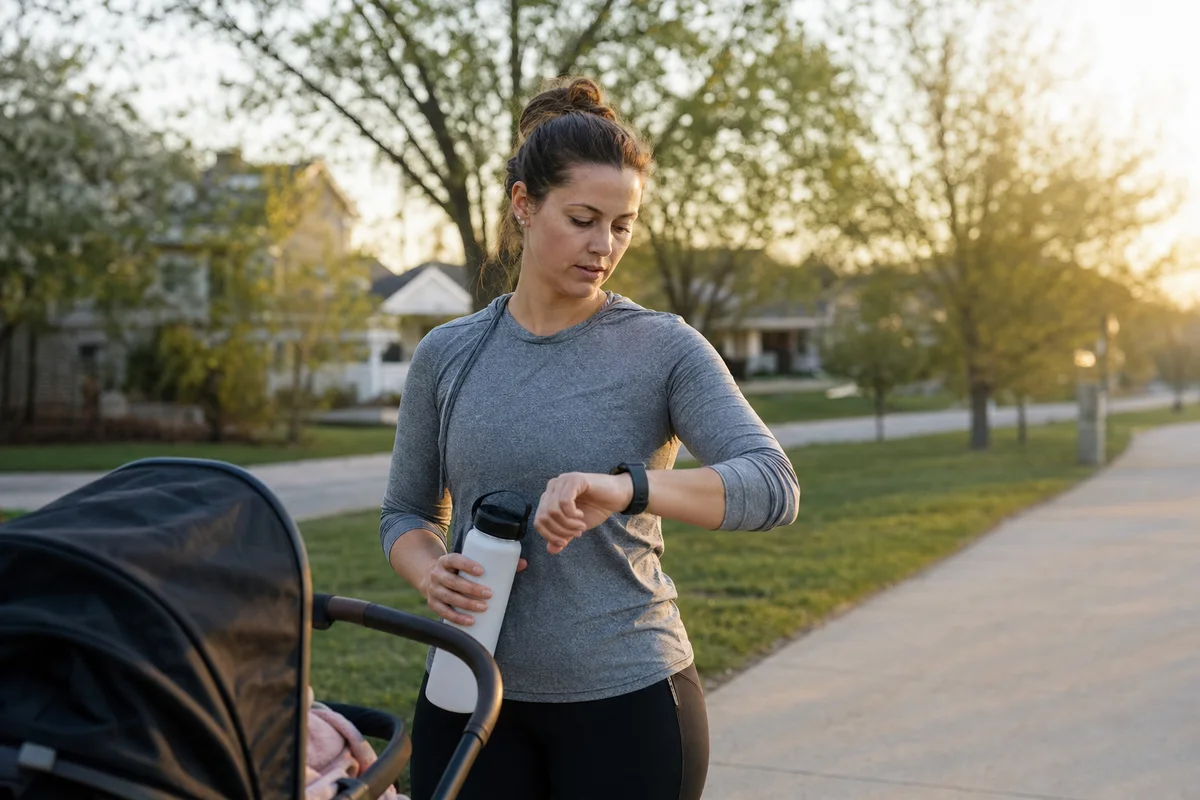
A simple target heart rate guide for parents who want safer, more efficient cardio sessions.
This article is educational and is not medical advice. Anyone managing a medical condition, injury, medication, or youth training program should work with a qualified professional.
Why heart rate is only one tool
Heart rate can help estimate cardio intensity, but it should not be treated like a perfect scoreboard. Sleep, caffeine, heat, stress, illness, medications, and dehydration can all change how hard a session feels at the same heart rate.
Parents rarely need a perfect fitness plan. They need a plan that survives school mornings, work, errands, meals, and the nights when everyone is tired. That is why heart rate should be paired with breathing, perceived effort, and recovery quality.
The basic target heart rate estimate
A common estimate for maximum heart rate is 220 minus age. The American Heart Association describes moderate-intensity exercise as roughly 50 to 70 percent of estimated maximum heart rate and vigorous activity as roughly 70 to 85 percent.
These are averages. They are useful for planning, but individual response can vary.
- Estimated max heart rate: 220 minus age.
- Moderate zone: about 50-70% of estimated max.
- Vigorous zone: about 70-85% of estimated max.
How the Karvonen method works
The Karvonen method uses heart rate reserve, which is the difference between estimated maximum heart rate and resting heart rate. It can make zones more personal because a lower resting heart rate changes the calculation.
Example: a 40-year-old with a resting heart rate of 70 has an estimated max of 180. Heart rate reserve is 110. A 60% target is 110 x 0.60 + 70, or 136 beats per minute.
- Step 1: estimate max heart rate.
- Step 2: subtract resting heart rate.
- Step 3: multiply by the target intensity.
- Step 4: add resting heart rate back in.
Use zones differently by situation
A realistic routine pairs movement with simple hydration cues: a bottle before the school run, water with meals, and an electrolyte option when the day includes heat, sweat, or back-to-back activity.
The best target zone depends on the goal of the session and what the body has already been through that day.
- Use moderate zones for efficient 20- to 30-minute cardio.
- Use short intervals only when sleep and recovery are decent.
- Do not chase high heart rates when stress is already high.
A practical check before pushing intensity
Before chasing a higher zone, ask whether the basics are covered. The body adapts best when training stress is supported by sleep, nutrition, hydration, and enough time between hard sessions.
- Did you sleep enough to recover?
- Have you eaten enough for the session?
- Are you hydrated before starting?
- Is today supposed to be hard or just consistent?
Common mistakes to avoid
- Making every session hard instead of separating easy, moderate, and hard days.
- Adding volume, load, and intensity at the same time.
- Ignoring sleep, meals, and hydration until performance drops.
- Quitting the plan because one busy week interrupts the schedule.
Quick checklist
- Estimate your zone, then compare it with breathing and perceived effort.
- Check resting heart rate trends, not just workout peaks.
- Use lower intensity when heat, stress, or fatigue is high.
- Stop chasing numbers if form, mood, or recovery is falling apart.
- Build the plan around realistic windows, not an ideal week that rarely happens.
FAQ
Is 220 minus age exact?
No. It is a common estimate and useful starting point, but real maximum heart rate varies. Use it with perceived effort, breathing, and professional guidance when needed.
Should I always train in the highest heart-rate zone?
No. Higher is not automatically better. Easy and moderate sessions build repeatable capacity, while hard sessions need more recovery. For parents, the answer should fit the actual calendar instead of a perfect training week.
Permenta takeaway
For practical daily hydration ideas, visit the Clean Daily Hydration hub. The goal is not to overcomplicate fitness; it is to make training, hydration, and recovery easier to repeat.