
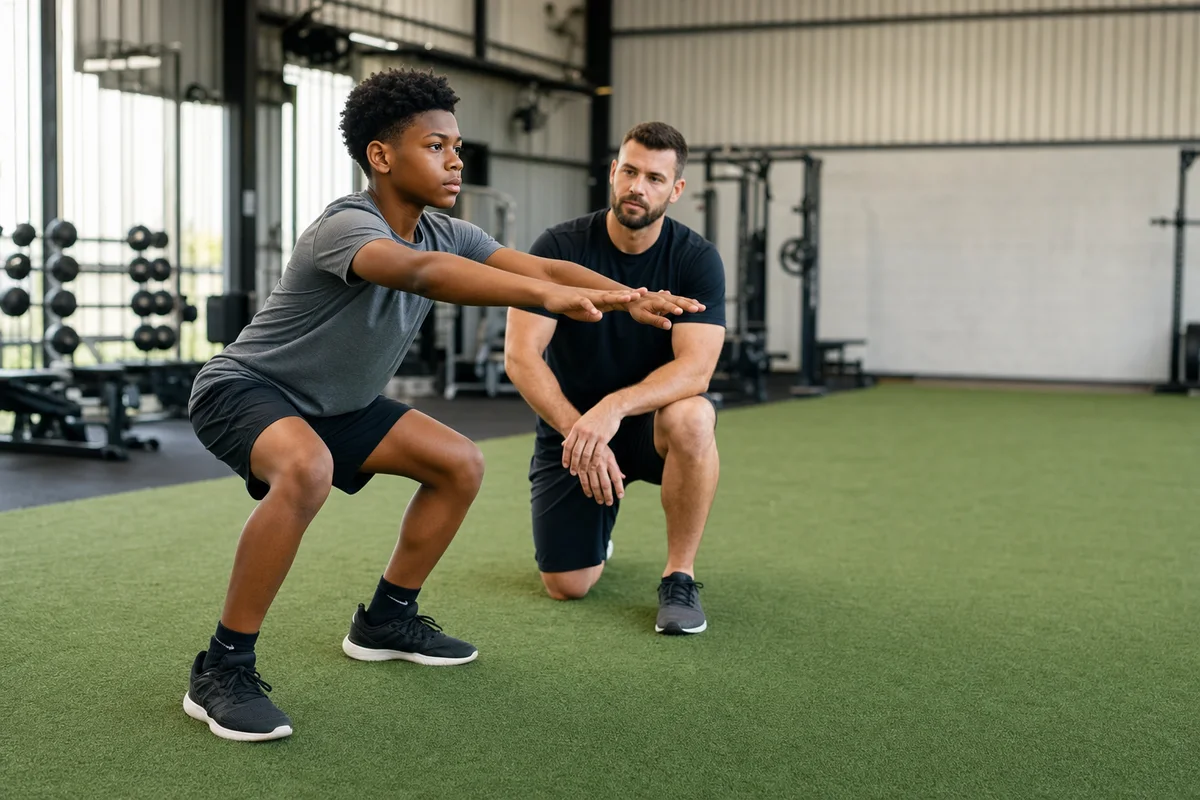
Technique-first strength training rules for youth athletes, parents, and coaches.
This article is educational and is not medical advice. Anyone managing a medical condition, injury, medication, or youth training program should work with a qualified professional.
Good strength training is controlled training
Strength training works best when the movement is controlled. Fast, sloppy reps can make a set look harder while reducing the quality of the stimulus.
Youth athletes need training that builds skill, confidence, and durability. The goal is not to copy adult gym routines; it is to match training stress with age, sport, season, and recovery.
- Move through a range you can control.
- Use a load that lets you keep posture and breathing.
- Stop a set when technique breaks down.
Train movement patterns, not just muscles
A complete plan should include the major patterns the body uses in real life and sport. This keeps training balanced and easier to adapt.
- Squat or knee-dominant work.
- Hinge or hip-dominant work.
- Push and pull movements.
- Carries, trunk stability, and rotation control.
- Mobility for joints that need range of motion.
Breathe through every rep
A simple rule is to exhale during the hard part of the movement and inhale as you return. More advanced bracing strategies can be useful for heavy lifting, but most people should first learn not to hold their breath randomly.
If breathing gets chaotic, reduce the load, slow the tempo, or extend the rest period.
Progress one variable at a time
Progressive overload does not mean changing everything at once. The safer move is to increase one variable, observe the response, and then decide what comes next.
Parents and coaches should keep hydration simple: water access first, regular breaks, meals and snacks around training, and a clean electrolyte option when heat, tournament schedules, or heavy sweat make it useful.
- Add a small amount of weight.
- Add one or two reps.
- Add one set.
- Improve tempo or range of motion.
- Reduce rest slightly only when technique stays clean.
Audience-specific priorities
The right rules depend on who is training and why.
- Technique comes before load.
- Strength work should support sport skill and growth, not replace coaching.
- Adult supervision matters for progression, spotting, and safe setup.
Where hydration fits
Strength sessions still create fluid loss, especially in hot gyms, garage workouts, long circuits, or two-a-day schedules. For parent- and coach-friendly resources, visit the Youth Athlete Hydration hub.
Common mistakes to avoid
- Making every session hard instead of separating easy, moderate, and hard days.
- Adding volume, load, and intensity at the same time.
- Ignoring sleep, meals, and hydration until performance drops.
- Using adult conditioning standards for growing athletes with different recovery needs.
Quick checklist
- Warm up with the movement pattern you plan to train.
- Control the rep before increasing the load.
- Train both sides and opposing patterns.
- Log enough detail to know what changed.
- Keep the plan age-appropriate and coordinated with parents, coaches, and school demands.
FAQ
Should every strength set go to failure?
No. Training to failure can be useful sometimes, but doing it constantly can reduce technique quality and increase recovery cost.
How many days a week should I strength train?
Two well-planned days can be enough for many people to build consistency. More days can work if volume, intensity, and recovery are managed. For youth athletes, the answer should also consider age, sport season, coaching supervision, sleep, and growth.
Permenta takeaway
For parent- and coach-friendly resources, visit the Youth Athlete Hydration hub. The goal is not to overcomplicate fitness; it is to make training, hydration, and recovery easier to repeat.