
Buying drinks for a crew should not come down to the loudest label or the brightest color. The better approach is to compare what the product actually provides and whether it fits the work environment.
A useful crew electrolyte drink is easy to store, easy to distribute, and clear about what is in each serving.
Compare the minerals first
- Sodium: important because sweat contains salt, especially during long hot shifts.
- Potassium: another electrolyte that supports normal fluid balance and muscle function.
- Serving size: make sure the listed minerals are per serving, not hidden behind multiple servings.
- Instructions: check how much water the product is intended to mix with.
Then check what the crew may not need
CDC/NIOSH recommends avoiding alcohol and drinks with high caffeine or sugar in heat work. That is a practical reason to compare electrolyte products against energy drinks and high-sugar sports beverages.
Added sugar is not automatically wrong in every sports context, but a worksite buyer should know how much sugar is being stocked and why it is there.
Practical crew questions
- Can the product be stored in a truck, trailer, locker, or hydration station?
- Does one serving mix clearly into a common bottle size?
- Is the label easy for a supervisor or buyer to understand?
- Does it contain caffeine or stimulant ingredients that do not belong in the hydration plan?
- Will workers actually drink it during breaks?
Where a clean packet makes sense
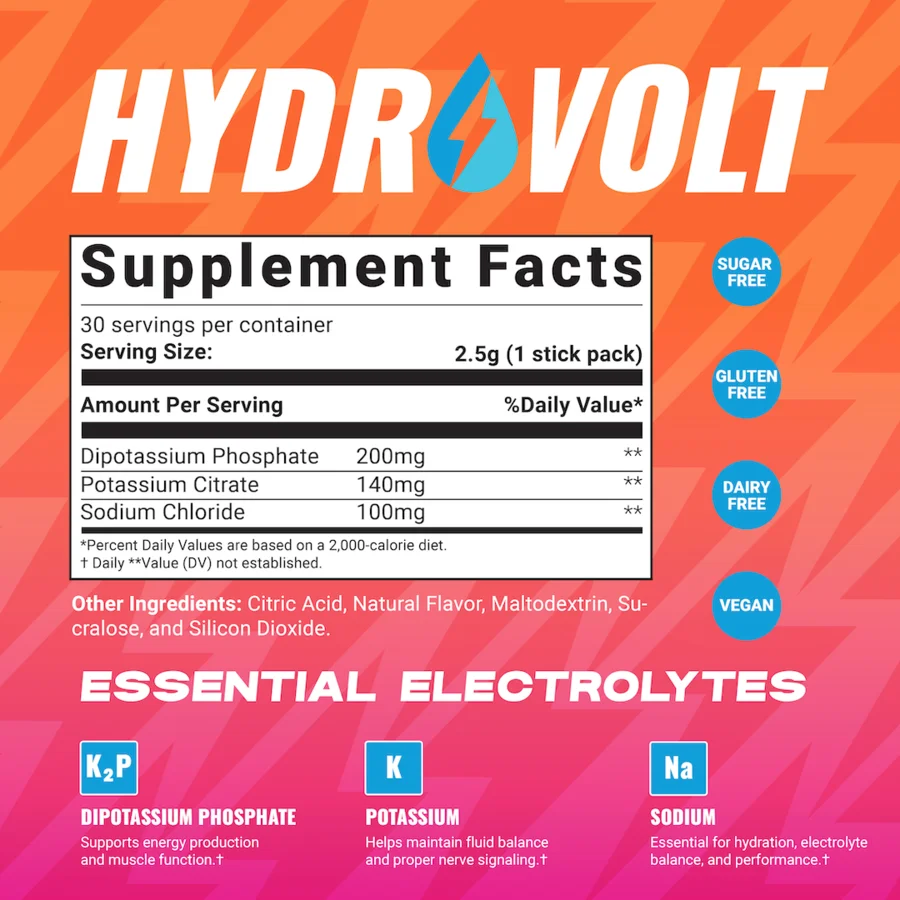
A stick pack format can make portion control and distribution easier. Hydrovolt fits this use case when the buyer wants a portable electrolyte option with no added sugar, no artificial dyes, and transparent sodium and potassium amounts.
Keep the message grounded: a drink choice supports the hydration plan. It does not replace heat training, rest breaks, shade, cooling areas, or medical response procedures.
Next step
Use this comparison guide alongside the Worksite Hydration hub when planning future crew education and buying content.